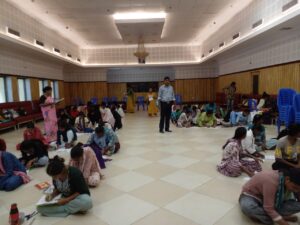
In July 2026, CRS conducted the final evaluation of its one-year Sewing Training Programme at St. Paul’s Cathedral Parish Hall for participants from seven project locations. 103 women and girls appeared for the evaluation, and all successfully passed.
The evaluation was conducted by an external evaluator from a Government School of Vocational Training and included theory, practical demonstration and viva. Each successful participant received a result sheet and CRS certificate in recognition of her achievement.
For many, this is not the end of the training but the beginning of new opportunities. Some may join the Nari Dana Production Unit, while others may produce items for Nari Dana from their own project locations. Some trainees have also started taking small sewing orders from people in their communities and earning an income from their skills. Others are continuing to explore different livelihood opportunities offered in their locations through training in paper bag making, spice making, candle making and junk jewellery.
For these women and girls, learning to sew is becoming a skill they can use in everyday life and, for some, a way to earn and contribute to their families.
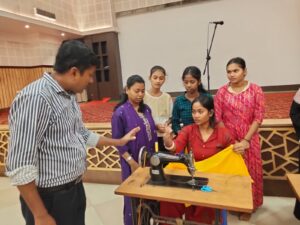
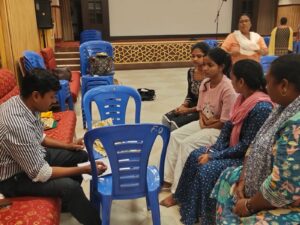
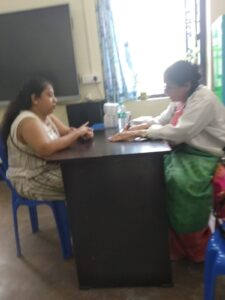
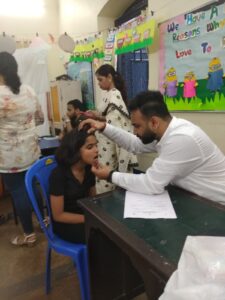
Holy Trinity Church, CNI Diocese of Calcutta, organised a special Health Camp to provide accessible and quality healthcare to community members.
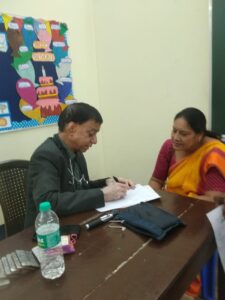
As part of the health camp, CRS contributed a team of specialist doctors in gynaecology, dental care and ENT, alongwith a CRS health worker, who actively participated throughout the programme. The doctors carefully examined patients, listened to their health concerns and provided appropriate medical advice and guidance. The CRS health worker supported the medical team and helped facilitate the consultations and interaction with patients.
The camp was further strengthened by the participation of several other specialist doctors, who generously gave their time to attend to community members. This brought together a diverse range of medical expertise under one roof and enabled patients to seek advice for different health concerns in a single visit.
For many community members, the camp provided a valuable opportunity to consult specialist doctors close to home, particularly for those who may face financial or other barriers to accessing specialist healthcare.
The successful health camp was a meaningful example of partnership and care. The initiative of Holy Trinity Church, together with the support of the CRS medical and health team, helped bring specialist healthcare closer to the community.
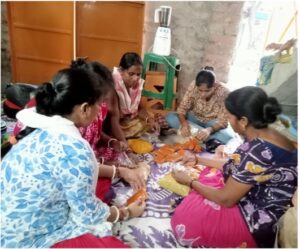
As part of Cathedral Relief Service’s (CRS) Women’s Empowerment Programme, women from low-income communities are trained to produce high-quality turmeric and chilli powder as a sustainable livelihood activity. The programme equips participants with practical skills that enable them to earn an income while meeting the needs of their local communities.
Training covers the complete production process, including selecting quality raw materials, cleaning, drying, grinding, sieving and hygienic packaging. Participants also learn basic costing, pricing, record-keeping and sales. Women are encouraged to market their products within their own communities, creating a reliable source of household income.
The programme promotes active participation, with women working together in small groups, sharing responsibilities and supporting one another throughout the production process. This collaborative approach builds confidence, strengthens teamwork and encourages entrepreneurship.
By producing and selling quality spices, women can increase their earning capacity, contribute to their families’ financial well-being, and gain greater confidence and independence. The initiative demonstrates how practical skills, combined with community-based enterprise, can create sustainable livelihoods and empower women to become active contributors to their households and communities.
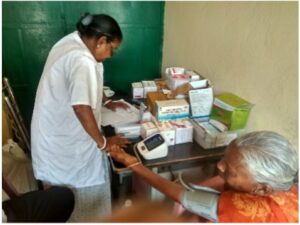
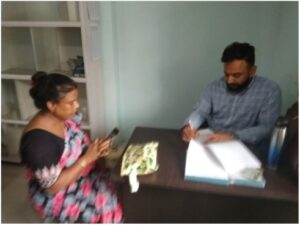
Iron Deficiency Anaemia (IDA) remains one of the most widespread yet preventable health problems affecting women and adolescent girls in India. In West Bengal, anaemia continues to be a major public health concern, contributing to poor health, reduced productivity, complications during pregnancy, and impaired physical and cognitive development. National health surveys indicate that a significant proportion of adolescent girls and pregnant women are anaemic, largely due to poor nutrition, repeated infections, limited health awareness, and inadequate access to preventive healthcare.
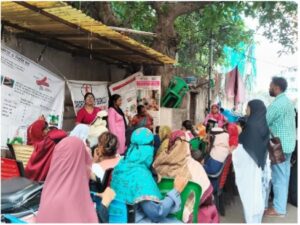
Through its work in eight urban slums in Kolkata and four rural communities in West Bengal, Cathedral Relief Service (CRS) has observed that many women and adolescent girls regularly experience weakness, dizziness, fatigue, and poor concentration. Community assessments and haemoglobin records have shown that many have Hb levels between 8–10 g/dL, well below the healthy level of 12 g/dL. Discussions with participants have also revealed limited understanding of anaemia, its long-term effects, and the importance of early diagnosis and treatment.
To address this challenge, CRS has developed a community-based Iron Deficiency Anaemia Programme that combines prevention, early detection, treatment, and follow-up care. The programme targets adolescent girls and women of reproductive age through a comprehensive package of services designed to improve their health and well-being.
The programme includes:
Community health workers play a vital role by encouraging women and girls to participate, monitoring their progress, reinforcing healthy dietary practices, and supporting beneficiaries throughout their treatment and recovery. This close community engagement helps ensure that participants complete their treatment and adopt healthier lifestyles.
By improving awareness, increasing access to diagnosis and treatment, and supporting recovery, the programme seeks to reduce the prevalence of anaemia, improve women’s health, prepare adolescent girls for healthy motherhood, and strengthen the overall well-being of families and communities. Healthy women and girls are better able to care for their children, participate in education and livelihoods, and contribute actively to community development. In this way, the programme represents a vital investment in long-term health, social well-being, and economic empowerment.