
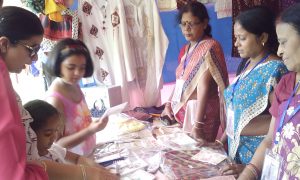
 Products made by women from CRS’s empowerment programme were on display at the St Paul’s Cathedral Grand Carnival on 7th November. The popular annual event held in the cathedral grounds includes produce stalls, refreshments, games and entertainment for all ages. On display at this year’s carnival were beautifully embroidered clothing, tablecloths and handkerchiefs, batik bags, crochet work, greetings cards, edible produce such as jam and sweets, and much more. All these were made by underprivileged women from Kolkata’s slums who have received skills training from CRS. On completion of their courses they can make high quality products for sale which helps to generate an income for their families.
A carnival atmosphere … Part 1
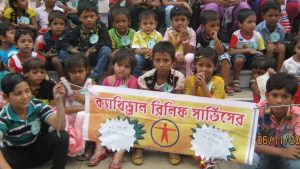 One hundred children from across the CRS Education Centres in Kolkata were selected to attend a Mega Children’s Day Carnival on 6th November. The event was hosted by La Martinere School, a private school in central Kolkata with an extensive campus. Each child received a gift bag and food packet, as well as 250 Rupees worth of coupons to spend at the carnival, on food and games. They all had a most memorable day with the staff and children of La Martinere School making them feel really special.
School teacher exchange programme
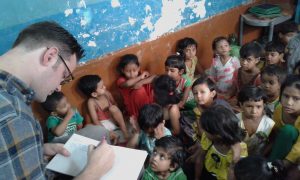 The Diocesan Board of Education in Derby, UK, secured a British Council grant for an exciting new exchange programme. In September, seven head teachers from church schools in Kolkata visited schools in the Derby diocese. In October the visit was reciprocated with a group of teachers from Derbyshire spending two weeks in India where they visited a range of education institutions from well-funded, prestigious schools to some of the CRS Education Centres which serve poor children in the slums.
It is hoped that this is just the start of enriching and long-lasting links between schools in the two countries. The British teachers noted that many of the Indian schools showed an extraordinary passion for transforming the lives of the poorest children, but few resources and little training. Among the follow up plans are UK teachers providing professional development for teachers in the slum schools through peer mentoring and model teaching, and fundraising to improve or replace 15 buildings which host the CRS Education Centres.
Friendly football match
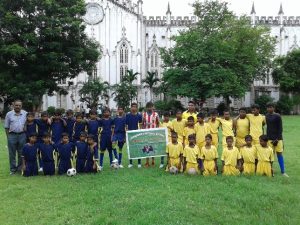 The serene grounds of St Paul’s Cathedral in Kolkata were transformed on 11th September into a football pitch! CRS established football teams for boys several years ago as a means of nurturing teamwork, giving children motivation and developing a sense of pride. A donation from Melbourne Parish Church in the UK earlier this year funded new kits and equipment for some of the teams.
The most recent match was a friendly with 20 boys from G B Lane School in navy blue strips facing a combined team of 19 from Basanti Devi Colony and Sukantanagar school dressed in yellow. Both teams played well but B D Colony and Sukantanagar were the victors by five goals to nil. The spirit of friendship was high between the teams and they are looking forward to meeting each other at the next match.
Blood tests in Bibibagan
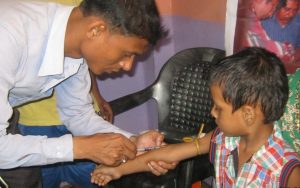 Many of the children living in city slums have a poor diet lacking in essential nutrients. One widespread problem is consuming insufficient iron causing iron deficiency anaemia. Iron helps the body to produce haemoglobin, a substance in red blood cells that enables them to carry oxygen around the body. This form of anaemia can leave sufferers tired and short of breath. On 9th September, CRS organised an iron deficiency anaemia clinic at Bibibagan which was sponsored by the Indian company, Larsen & Turbo. Prior to the event, the health team spent two days making the community aware of anaemia and the importance of having their children checked. On the day, 80 children between the ages of 4 and 14 were checked by Dr Sumit Shaw. They received iron supplements, along with deworming tables and syrup. 23 of the children showing particularly low haemoglobin levels had blood tests, administered by pathologists from Good Health Diagnostics, and will receive follow-up treatment.